Minimalist Kitchen Sideboard: Smart Storage, Zero Clutter
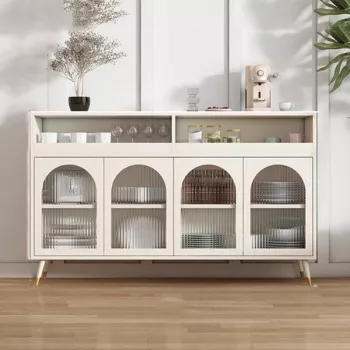
Modern Minimalist Kitchen Sideboard: Clean Storage, Calm Counters, and a Polished Look
A modern minimalist kitchen sideboard adds practical storage without visual clutter—ideal for organizing serveware, small appliances, linens, and pantry overflow while keeping the room feeling open. The right piece balances streamlined design with everyday durability, especially around heat, spills, and frequent use. When chosen well, it becomes the “quiet hero” of the kitchen: a place to stage meals, hide the mess, and maintain that calm, polished look even on busy days.
What a Kitchen Sideboard Does Best
In real-life kitchens, the challenge isn’t a lack of cabinets—it’s the way daily items spread across counters and interrupt flow. A sideboard solves that by creating a dedicated, contained hub.
- Creates a dedicated zone for serving, staging, and quick prep without crowding primary countertops
- Hides everyday items (mugs, snack bins, extra paper goods) behind clean-front doors or drawers
- Improves kitchen flow by relocating occasional-use appliances and bulk items to one organized hub
- Adds a strong horizontal line that visually anchors open-plan kitchens and dining nooks
Modern Minimalist Style Features to Look For
Minimalism reads best when the details are intentional. Look for a facade that stays visually uninterrupted, with consistent spacing and a finish that doesn’t “fight” your kitchen lighting.
- Flat, handleless, or low-profile pulls that keep the facade uninterrupted
- Simple geometry and consistent gaps between doors and drawers for a precise look
- Matte or satin finishes that resist fingerprints and reduce glare under kitchen lighting
- Neutral tones (white, black, warm oak, greige) that pair easily with stone, stainless, and wood accents
- Leg style choices: recessed plinth for a built-in feel or slim legs for a lighter visual footprint
Materials and Construction That Hold Up in a Kitchen
Kitchens are high-impact environments: steam, splashes, grease, and frequent wipe-downs. Prioritize finishes and hardware that stay smooth and aligned over time.
- Cabinet body: engineered wood with quality edge banding helps prevent swelling at exposed corners
- Door fronts: durable laminates or sealed veneers are easier to wipe down after splashes
- Countertop surface: heat- and stain-resistant materials are helpful for coffee machines, air fryers, and hot serving dishes (still use trivets when possible)
- Hardware: soft-close hinges and full-extension drawer slides improve daily usability and reduce slamming
- Ventilation: leave breathing room behind and above heat-producing appliances to avoid moisture and heat buildup
If the sideboard will sit near cooking zones, it’s also smart to consider indoor air quality and low-odor materials/finishes. The EPA’s overview of VOCs and indoor air quality is a helpful reference when evaluating new furniture and finishes.
Sizing, Layout, and Clearances
A sideboard should make the kitchen feel easier—not tighter. Before choosing a style, map the clearances around doors, drawers, and nearby appliances. The NKBA Kitchen Planning Guidelines are a useful benchmark for thinking through spacing and traffic flow.
- Measure the wall length and keep doors, drawers, and nearby traffic lanes unobstructed
- Allow comfortable walking clearance in front so multiple people can move through the kitchen
- Check door swing paths near dishwashers, ovens, and refrigerators to avoid collisions
- Plan storage by category: serving platters and bowls near dining; pantry overflow near prep zone; barware near entertaining area
- If placing under art or shelves, map vertical spacing so the sideboard reads as a cohesive vignette rather than an afterthought
Quick Fit Guide for a Kitchen Sideboard
| Placement detail | What to confirm | Why it matters |
|---|---|---|
| Walkway in front | Clear path for passing and opening doors/drawers | Prevents bottlenecks during cooking and cleanup |
| Nearby appliances | Door swings and handles won’t hit fridge/oven/dishwasher | Avoids daily friction and damage |
| Electrical access | Outlet location for coffee gear or warming trays | Keeps cords tidy and off counters |
| Wall and baseboards | Back clearance and baseboard interference | Helps the unit sit flush and look built-in |
| Storage planning | Largest items fit (platters, small appliances) | Reduces clutter and unused space |
Storage Configuration: Doors, Drawers, and Display
Minimalist exteriors work best when the interior organization is equally thoughtful. The goal is to store more while showing less.
Styling a Minimalist Sideboard Without Making It Busy
Care and Everyday Maintenance
Two Sideboard Options to Compare
| Option | Best for | Notable design cues | Link |
|---|---|---|---|
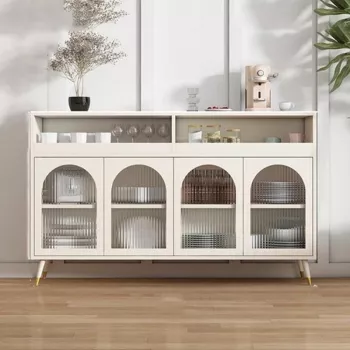
| Modern Minimalist Kitchen Sideboard | Everyday kitchen storage and clean lines | Simple, understated look that blends with modern interiors | Modern Minimalist Kitchen Sideboard |
| Luxury Modern Minimalist Sideboard with Transparent Doors and High-Temperature Resistant Countertop | Entertaining, display storage, and higher heat tolerance | Transparent doors + countertop built for hot items (use protection as needed) | Luxury Modern Minimalist Sideboard with Transparent Doors and High-Temperature Resistant Countertop |
For added peace of mind when using countertop appliances, it can also be helpful to look for reputable electrical safety markings on the appliance itself. UL provides a public certification and standards lookup that can help verify product safety information.
FAQ
Can a kitchen sideboard hold small appliances like a microwave or coffee machine?
Yes—confirm the sideboard’s weight capacity, protect the surface from heat (or choose a heat-resistant top), and leave ventilation space around appliances that exhaust heat or steam.
What’s the difference between a sideboard and a buffet in a kitchen setting?
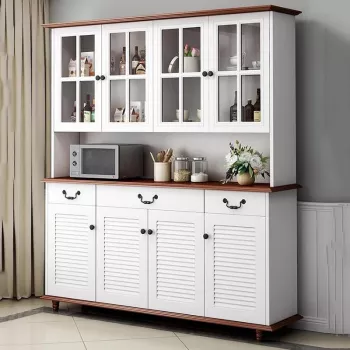
They’re very similar; “buffet” often emphasizes serving use and may be paired with a hutch, while “sideboard” commonly points to streamlined storage. Choose based on footprint, storage layout, and how you’ll use the top day to day.
How do you keep a minimalist sideboard from looking cluttered?
Limit countertop items to a small, consistent set (like a tray plus one tall element), store daily essentials behind doors, and manage cords with hidden power solutions so the surface stays visually calm.









Leave a comment